Total
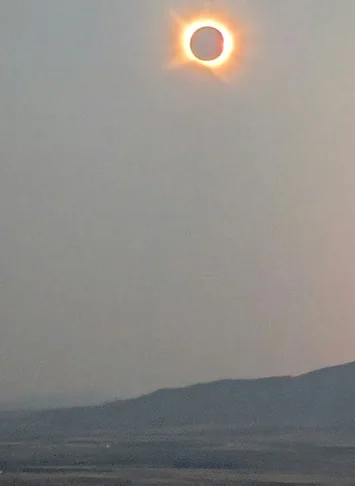
The Moon covers the entire bright solar disc. Along a narrow path on Earth, daylight briefly fades and the delicate solar corona appears around the black disc.
The Sun. The Moon. You.
A few minutes that stay with you for a lifetime. Discover solar eclipses, see how they happen, and prepare for your own encounter with the Moon’s shadow.
Explore an eclipse↗View my photographsA solar eclipse happens when the Moon passes between Earth and the Sun, casting its shadow onto our planet.
From the ground, we watch the Moon’s dark disc gradually cover the Sun. This can happen only at new moon. It does not happen every month: the Moon’s orbit is tilted by about 5.1° relative to Earth’s orbital plane, so its shadow usually misses our planet.
Inside the umbra, observers can see a total eclipse; in the penumbra, a partial eclipse; beyond the tip of the umbra, in the antumbra, an annular eclipse. The narrow eclipse path sweeps across Earth as the Moon moves and our planet rotates. Your observing location makes all the difference.
The Moon covers the entire bright solar disc. Along a narrow path on Earth, daylight briefly fades and the delicate solar corona appears around the black disc.
The Moon appears too small to cover the whole Sun. A bright ring remains at maximum. Eye protection must stay on throughout this eclipse.
The discs overlap only partly. The Sun looks like a circle with a bite taken out or a crescent. Outside the central path, total and annular eclipses are also seen as partial.
Before looking up from the ground, view the eclipse from space. Move the Moon along its orbit and see when its shadow cone reaches our planet.
Interactive 3D perspective model. Earth moves along its heliocentric ellipse around the Sun, and the Moon moves strictly along its 3D elliptical orbit around Earth (with Earth at the focus, perigee P, apogee A and nodes ☊/☋). Drag the stage to rotate the 3D camera.
Play the sequence or scrub the slider. Watch the 3D lunar sphere travel strictly along its elliptical orbital arc across the Sun.
Educational schematic. Sizes, path and speed are illustrative; this animation does not predict conditions or timing for a specific location. The outer glow illustrates the corona, not the view through a solar filter. The C1–C4 description below follows a total eclipse. A partial eclipse has only C1 and C4; in an annular eclipse, C2 and C3 mark the beginning and end of annularity.
The Moon’s edge touches the solar disc. The partial phase begins, usually lasting much longer than the central phase.
Only inside the path of totality does the last part of the bright photosphere disappear. Baily’s beads and the diamond ring may appear at the Moon’s uneven edge.
A total eclipse reveals the corona, an annular eclipse leaves a bright ring, and a partial eclipse reaches its greatest coverage of the Sun.
C3 ends the central phase: protection must be back on before the photosphere reappears. At C4 the Moon moves completely clear of the solar disc.
Meet the Sun, Earth and Moon — their physical parameters, their role in an eclipse, and the dramatic story of how each of them formed over 4.5 billion years ago.
For millennia, sudden darkness at midday was seen as the wrath of the gods. Those who learned to predict eclipses gained a potent instrument of power over the public.
The next encounters with the shadow and recent celestial spectacles. Choose the event that will start your journey.
Mexico, USA, CanadaView on the map →
PastPacific, southern Chile and ArgentinaView on the map →
PastEurope, North Atlantic, northwestern AfricaView on the map →
PastNew Zealand, South Pacific, AntarcticaView on the map →
PastAntarcticaView on the map →
PastGreenland, Iceland, SpainView on the map →
PastSouth America, Atlantic, western AfricaView on the map →
UpcomingSouthern Spain, northern Africa, Middle EastView on the map →Local times for cities →
UpcomingSouth America, Portugal, SpainView on the map →
UpcomingAustralia, New ZealandView on the map →
UpcomingRegions mainly describe the path of the central phase or the visibility area of a partial eclipse. They do not imply visibility across an entire country. See the exact shadow path, coverage and times for any place on the interactive eclipse map (in Polish). Before you travel, compare them with NASA maps.
Proper eye protection is your most important equipment. Plan everything else ahead so you can simply be present at the decisive moment.
Choose a location inside the path of totality or annularity if you want the central phase. Check local timing, clouds, access and an unobstructed horizon. In Spain in 2026 the Sun was low — hills or buildings could hide the finale.
Inspect your solar filter before use. Do not use it if scratched, punctured or damaged. Put protection on before looking at the Sun, and turn away before removing it. Children must always be supervised.
Cameras, binoculars and telescopes need a suitable solar filter secured in front of the objective lens. Never use eclipse glasses as a substitute for an optical filter when looking through them — concentrated light can damage the filter and your eyes.
Unfiltered viewing is safe only during the fully total phase, strictly inside the path of totality, when the whole bright photosphere is hidden. Replace protection before totality ends. If uncertain, keep it on.
A small hole in a card projects an image of the Sun onto a second card. Look at the projection, never through the hole at the Sun. Gaps between leaves can also project dozens of solar crescents.
Practice with your camera before travelling. Bring spare batteries, water, sun protection and a warm layer. During the central phase, notice the surroundings too: changing light, temperature and the natural world’s response.
Your pre-trip checklist
Check off what you have packed. This list is saved only in this browser.
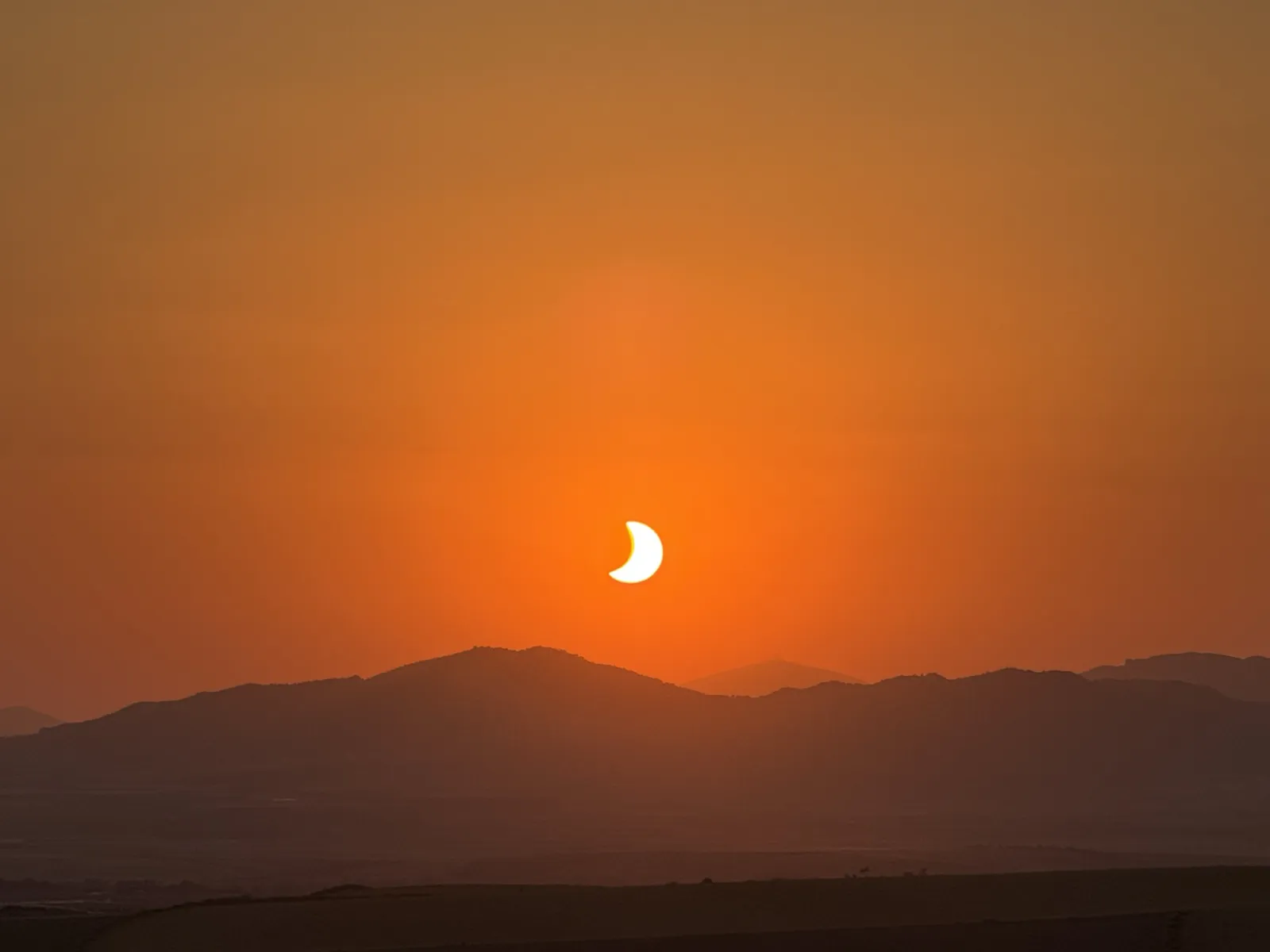
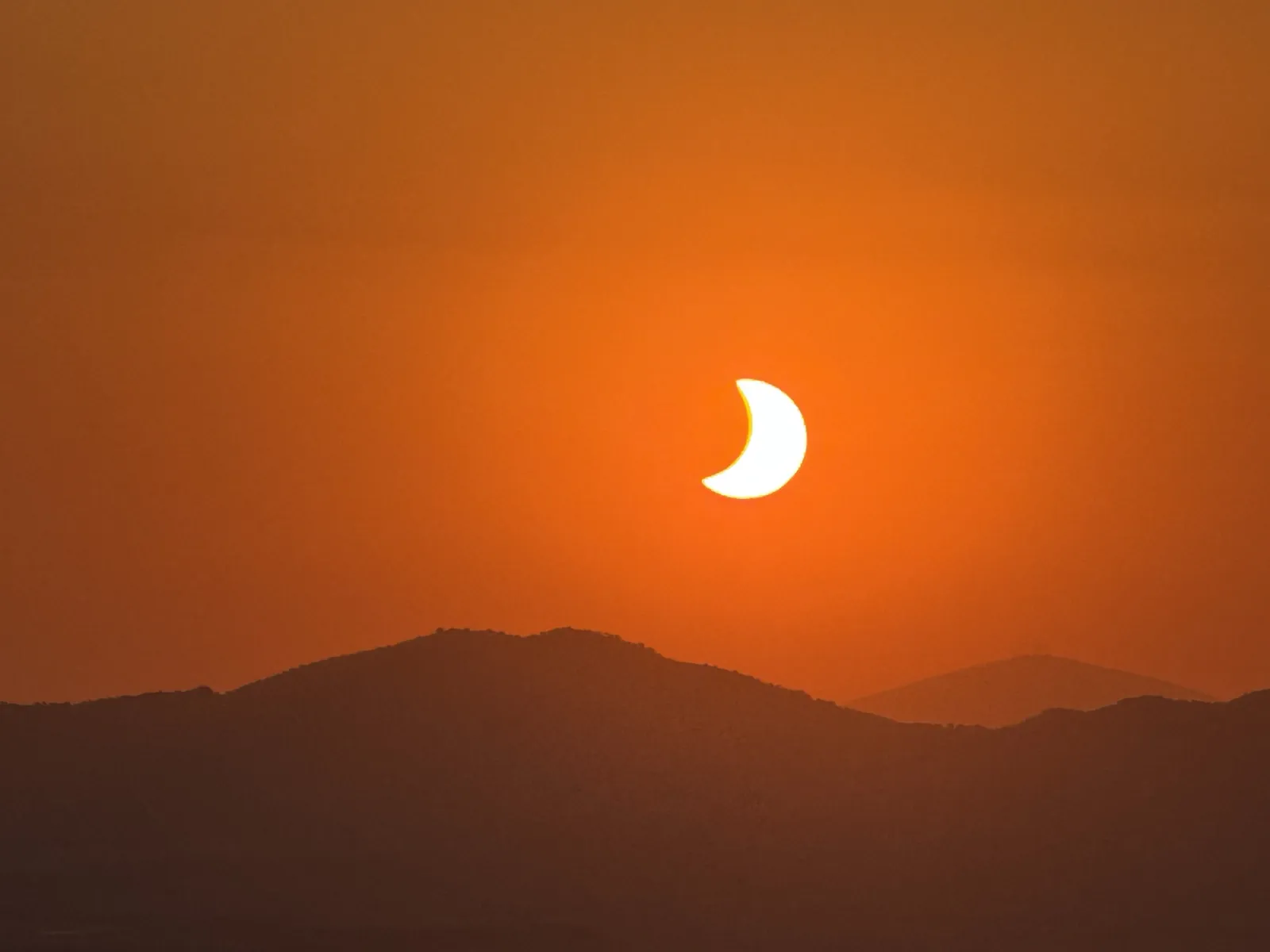
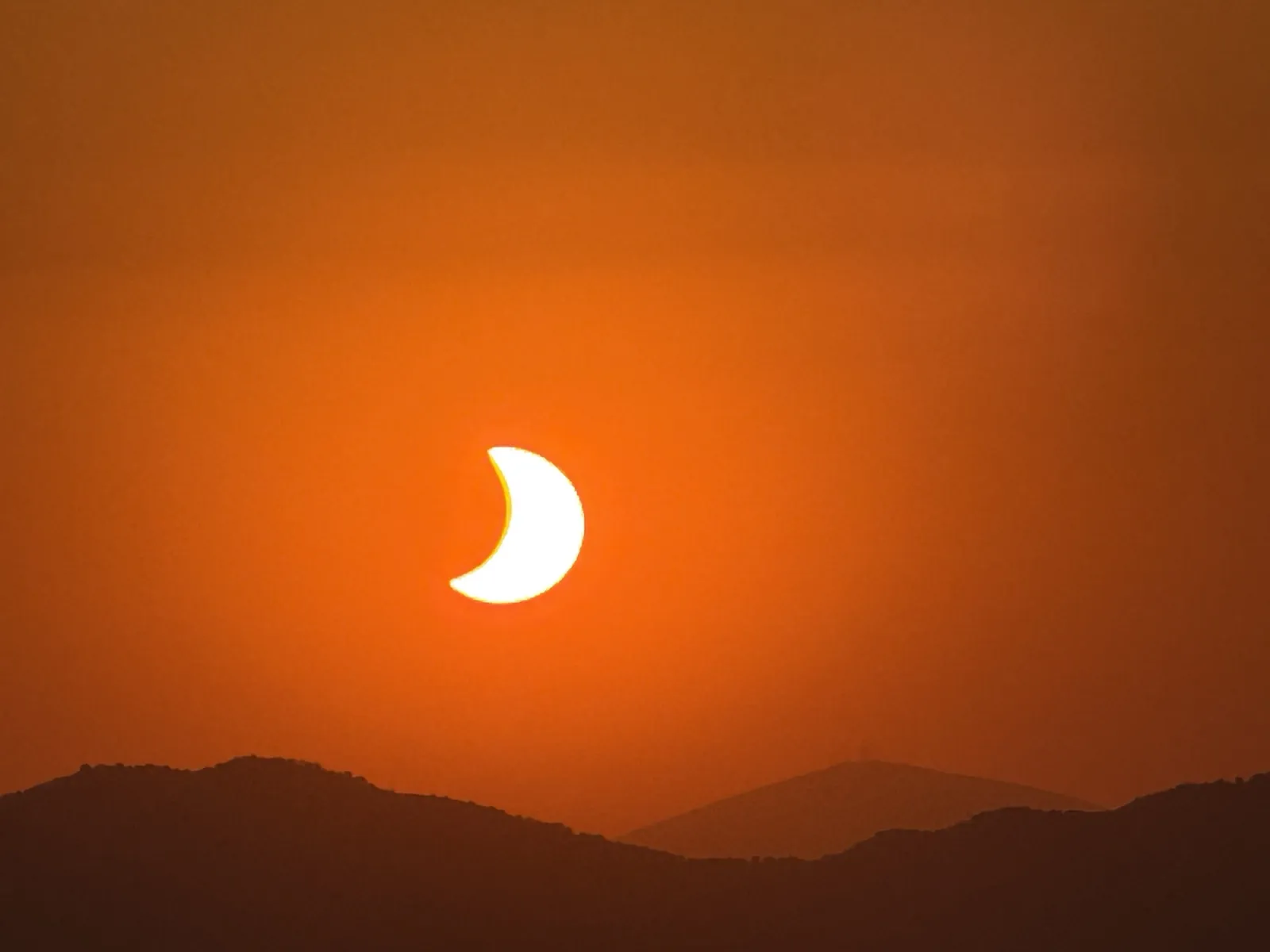
My photographs from the solar eclipse of 12 August 2026 near Zaragoza. A small part of an extraordinary spectacle.
Photography: Marek Mucha · Spain, 12 August 2026 · Originals remain in a private archive.
Spain 2026: the story and the eclipse timeline→Tworzę tę stronę w wolnym czasie. Rezygnuję z reklam, bo spowalniają stronę i utrudniają korzystanie z niej. Drobne, dobrowolne napiwki to jedyna forma finansowego wsparcia tej pracy. Wszystkie materiały są bezpłatne.
Proponuję 10 zł. Możesz wybrać własną kwotę do 1000 zł.
I build this site in my spare time. I keep it ad-free because ads slow it down and make it harder to use. Small, optional tips are the only financial support for this work. All materials are free.
Suggested tip: €4. Choose an amount up to €200. If Stripe offers your local currency, select EUR to pay in euros.
Creo esta web en mi tiempo libre. No incluyo anuncios porque ralentizan la página y dificultan su uso. Las pequeñas propinas voluntarias son el único apoyo económico que recibo para este trabajo. Todo el contenido es gratuito.
Propina sugerida: 4 €. Puedes elegir un importe de hasta 200 €. Si Stripe te ofrece tu moneda local, elige EUR para pagar en euros.